

Selling the House During a Divorce Doesn’t Have to Be Another Fight
We buy marital homes across Rhode Island as-is for cash. One walkthrough, one written offer both of you can review, no repairs, no commissions, and a closing date that works for everyone involved.
- Sell As-Is
- No Repairs
- No Commissions
- No-Obligation Offer
- Flexible Closing
Can you sell a house during a divorce in Rhode Island? Yes. If both spouses agree, or the Family Court approves, the marital home can be sold at any point in the process, with proceeds held in escrow or divided under the settlement. Offer New England buys marital homes across Rhode Island as-is for cash: one walkthrough, a written offer both parties can review, no repairs, no commissions, and a closing date both sides agree on.
One home, two households, and a listing that needs both of you
The house is usually the largest thing a divorcing couple owns and the hardest to split. A traditional listing needs both spouses to agree on an agent, a price, the repairs, who pays for staging, who leaves for showings, and every counteroffer for months. Each of those is a fresh negotiation with someone you are already negotiating with in Family Court. Meanwhile the mortgage, taxes, and insurance keep coming due in both names.
A cash sale collapses that into a single decision. We make one written offer, both of you review it with your attorneys, and if it works, we close on a date you both choose. Proceeds go to the closing attorney or escrow per your agreement or court order, not to either spouse directly, unless that is what the order says.
- One walkthrough. Either spouse can be present, or neither. No open houses, no strangers through the home.
- One number. A written offer that both attorneys can read, with no commission coming off the top.
- One date. Close in as little as 14 days, or line the closing up with the final judgment if that’s what the order requires.

What Rhode Island couples usually do with the marital home
Your attorney will help you choose. Here is how each one plays out in practice.
Sell and divide the proceeds
The cleanest break. The house is sold, the mortgage is paid off, and the net proceeds are divided under your settlement agreement or the court’s equitable-distribution order. This is where a fast, certain cash sale helps most: no repairs to argue over, no months of showings, and a closing that will not fall through on financing.
One spouse buys the other out
One spouse keeps the house, refinances into their own name, and pays the other their share of the equity. It works when the staying spouse can qualify for the mortgage alone. When they cannot, or the appraisal comes in low, couples often fall back to selling.
Keep it jointly for a while, then sell
Sometimes ordered when minor children are in the home. One spouse stays until a set date or event, then the house is sold and divided. The risk is deferred maintenance and a strained co-ownership. When that date arrives, an as-is sale avoids reopening the repair question.
What the Family Court does with the house
Rhode Island is an equitable-distribution state. Under R.I. Gen. Laws § 15-5-16.1, the Family Court divides marital property fairly, not automatically 50/50, after weighing twelve statutory factors including the length of the marriage, each spouse’s contributions, and conduct. Talk to a Rhode Island family-law attorney before you sign anything; the points below are general education, not legal advice.
Marital vs. premarital home
A house one spouse owned before the marriage and kept in their own name is generally not divided, but the court can assign the increase in its value that came from either spouse’s efforts during the marriage. Adding your spouse to the deed, or paying the mortgage from joint funds, can change that analysis.
Do not sell without agreement
Transferring or encumbering marital assets in contemplation of divorce without fair consideration is one of the twelve factors the court weighs. If the deed is in both names, both signatures are needed anyway. Get written agreement or a court order before accepting any offer, including ours.
The 90-day waiting period
After the nominal hearing, Rhode Island imposes a 90-day waiting period before the final judgment enters (20 days for the three-year separate-and-apart ground). A sale can close before final judgment when both parties consent or the court approves, with proceeds held until distribution.
Division is final
Once the property division is entered in the final decree it generally cannot be modified, unlike child support or alimony. That is why attorneys want the home’s value settled by a real, written offer or appraisal, not an estimate, before the decree is signed.
On taxes: a couple who sells while still married and files jointly may exclude up to $500,000 of gain on a primary residence; after the divorce each former spouse may exclude up to $250,000, and federal rules let a spouse who moved out count the other’s continued use under a divorce instrument. Our capital gains guide for RI and MA sellers covers the details. Confirm your situation with a CPA.
Three steps, and both of you stay in control
Either spouse reaches out
Fill out the form below or call (401) 267-4066. We only need the address and a sense of the condition. Tell us it’s a divorce sale and we’ll work with both attorneys from the start.
One walkthrough, one written offer
We visit once, at a time that works for whoever is in the house. Within 24 hours you both receive the same written cash offer, in writing, with nothing to negotiate about repairs.
Close on the agreed date
Once both spouses sign, or the court approves, we close at a Rhode Island title company. Proceeds are disbursed exactly as your agreement or order directs.
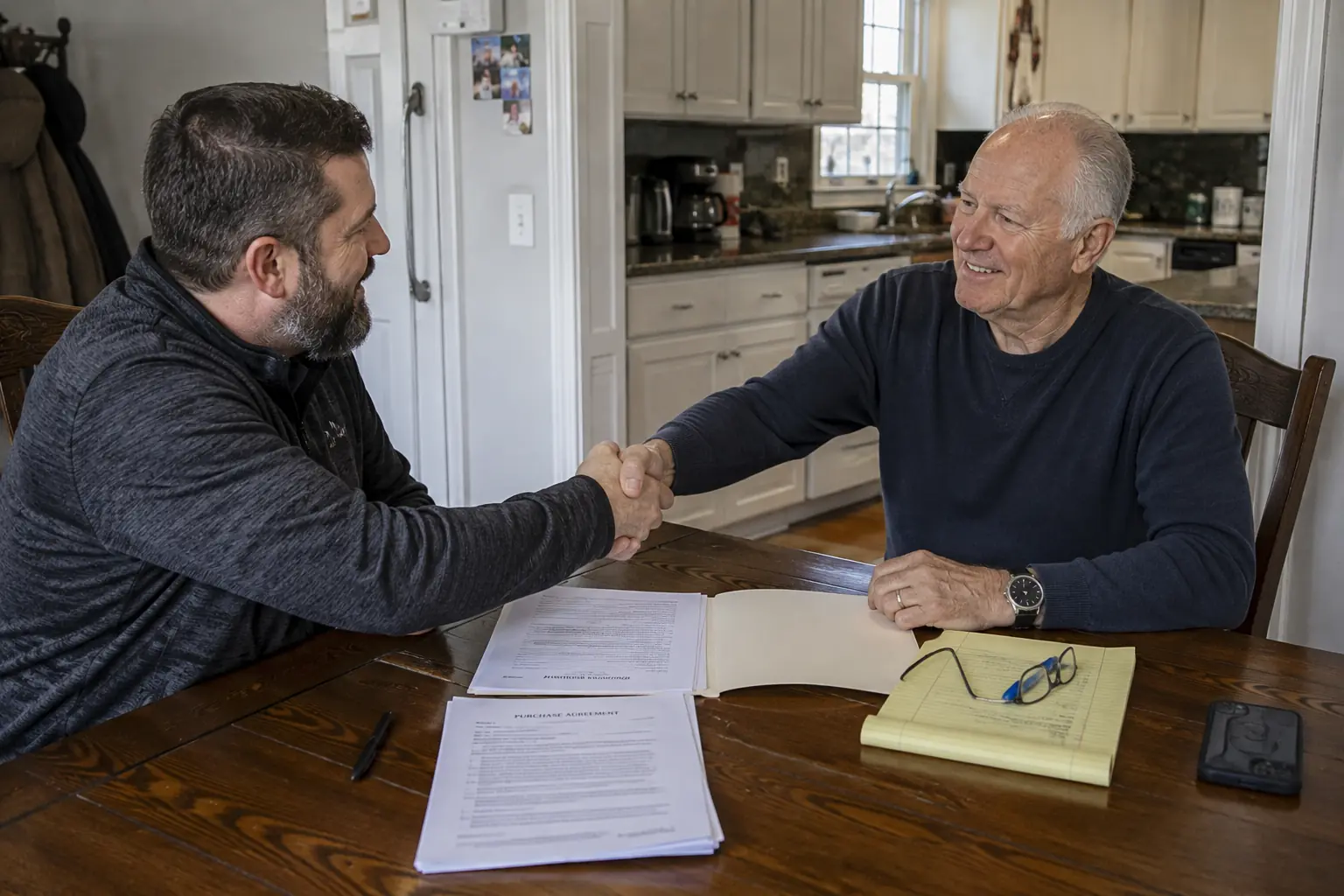
Listing during a divorce vs. selling to Offer New England
Listing with an agent
- Both spouses must agree on the agent, the price, and every price change
- Repairs and staging paid for now, split later, argued about in between
- Weeks of showings while one of you still lives there
- Inspection, appraisal, and financing contingencies that can collapse the deal
- Roughly 5–6% in commissions off the top before the split
Selling to Offer New England
- One written offer both attorneys can review side by side
- Sell as-is, nothing to repair, clean, or stage
- One private walkthrough, no showings
- Cash, so no appraisal or lender to fall through
- No commissions; close in as little as 14 days or on the court’s timeline
A listing can net more when the house is in good shape and both of you can wait. Our honest comparison of companies that buy houses in Rhode Island explains when that’s the better call.
Selling a house during divorce in Rhode Island: FAQ
Can one spouse sell the house without the other’s consent in Rhode Island?
If both names are on the deed, no; both signatures are required to transfer title. If only one name is on the deed, the house may still be marital property subject to division, and selling it in contemplation of divorce without fair consideration is a factor the Family Court weighs against that spouse. Get written agreement or a court order first. We will not close a divorce sale without one.
Do we have to wait until the divorce is final to sell?
No. A Rhode Island divorce cannot become final until 90 days after the nominal hearing, but the house can be sold before then if both spouses consent or the court approves. Proceeds are typically held in escrow or by the closing attorney until the settlement or final decree says how to divide them. Selling early stops the mortgage, taxes, and insurance from draining equity during the wait.
Who gets the proceeds from the sale?
Whatever your property settlement agreement or the Family Court’s order says. Rhode Island divides marital property equitably, which is often but not always equal. At closing, the mortgage and liens are paid first, then the net proceeds go to escrow or are split per the order. We do not pay either spouse directly unless the agreement or order directs it.
What if I owned the house before we got married?
A house held in one spouse’s name before the marriage is generally not divided in a Rhode Island divorce, but the court can assign the increase in its value that resulted from either spouse’s efforts during the marriage, and adding your spouse to the deed or paying the mortgage from joint funds can change how the court treats it. Your attorney needs to confirm the classification before you sell.
Can we still sell if we are behind on the mortgage?
Yes, and it is often the reason to move quickly. A cash sale that closes in weeks can pay off the arrears and stop a foreclosure before it damages both spouses’ credit. If a lender has already started the process, read our Rhode Island foreclosure guide, then call us; we work with the lender’s timeline.
Will you deal with both of us, or just one?
Both. We send the same written offer to both spouses, or to both attorneys if that is how you prefer to communicate, and we are comfortable with only one spouse attending the walkthrough. Our job is to make the house one less thing to fight about, so we keep everything in writing and copied to both sides.
Does the house need to be cleaned out or repaired first?
No. We buy as-is. If one spouse has moved out and left belongings, or the house has deferred maintenance neither of you wants to fund, that is fine. Take what you each want, and we handle the rest after closing. Nothing about the condition needs to be negotiated between you.
How is capital gains tax handled on a divorce sale?
Under federal rules, a couple who sells a primary residence while still married and files jointly can exclude up to $500,000 of gain. After the divorce, each former spouse can exclude up to $250,000, and a spouse who moved out can generally count the other’s continued use under a divorce instrument toward the ownership-and-use test. Timing the sale matters, so run it past a CPA before you decide.
More ways we help Rhode Island homeowners
- We Buy Houses in Rhode Island
- Capital Gains Tax When Selling in RI & MA
- How to Sell a House As-Is in Rhode Island
- Facing Foreclosure in Rhode Island
- Companies That Buy Houses in Rhode Island
- Sell a House Without a Realtor in Rhode Island
- Sell My House Fast in Providence, RI
- Sell My House Fast in Cranston, RI
- Sell My House Fast in Coventry, RI
- How We Buy Houses
Make the house one less thing to fight about
Get a written, no-obligation cash offer both of you can review. No repairs, no showings, no commissions, and a closing date that fits the court’s timeline.
Tell us about the property
Fill out the form below and a member of our team will call within 24 hours with a fair cash offer. Prefer to talk now? Call (401) 267-4066. Everything stays confidential and in writing.
This page is general education for Rhode Island homeowners and is not legal, tax, or financial advice. Property division, the marital-home classification, and sale timing depend on your specific case and the orders of the Rhode Island Family Court; consult a Rhode Island family-law attorney and a CPA before selling. Statutory references: R.I. Gen. Laws §§ 15-5-16.1 and 15-5-23. Offer New England is a local cash home buyer, not a law firm.